
July 16th began as many days in the life of a postdoctoral researcher do: with a flurry of measurements, meetings, and putting the not-quite-finishing touches on a manuscript. This particular day, however, came with an additional annoyance—a doctor's appointment to check out the continual whooshing in my ear, timed to my heartbeat. The symptom had arisen during a protracted, month-long battle with an illness that started as a cold before progressing into a high fever. The fever and cough resolved, but the whoosh remained. I was not very concerned as I biked to Mt. Sinai for my mom-scheduled doctor's appointment. After all, a quick perusal of Reddit revealed plenty of people suffering from the same annoying pulsatile tinnitus, sometimes for years and years without any apparent issue. As I expected, the doctor referred me to other specialists over the coming months. I returned to the breakneck-paced lab work, mildly reassured that my eardrum was intact and that eventually we would get answers.
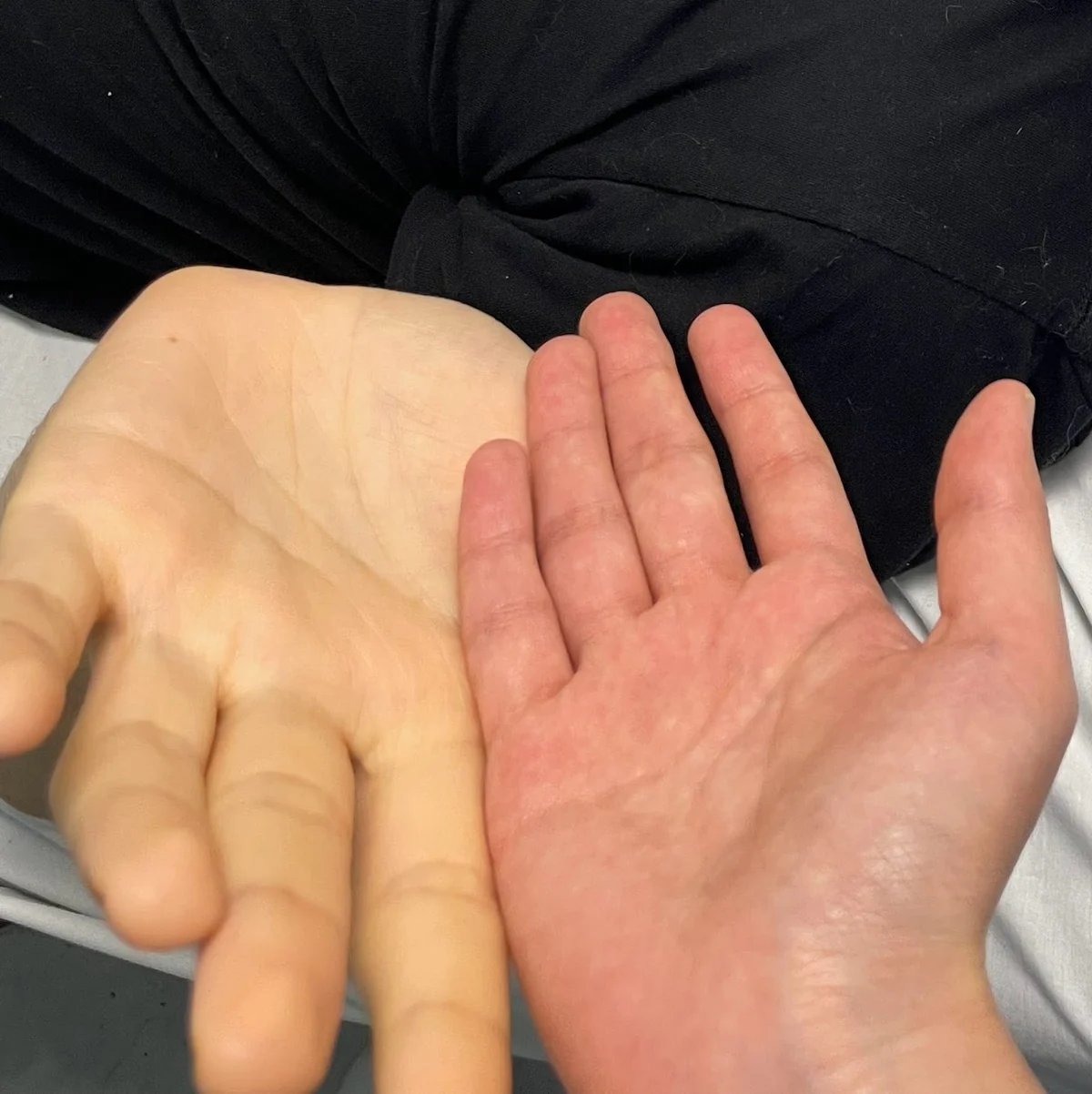
After I got out of the shower that night, I noticed three missed calls and a new message on MyChart. The message read, "Mr. Ck, It looks like your hemoglobin is very low... Please go to the emergency department as soon as possible so you can receive a blood transfusion." Blood transfusions are usually given when hemoglobin levels drop below 7-8 g/dL (normal is ~14-18). On July 16th, mine was ~5 g/dL. Considering how long the whoosh had lasted, I probably had critically low hemoglobin for several months. I had somehow pushed through the hardest-working months of my life in a state of literal medical emergency. But as I looked through the results of my complete blood count (CBC) on MyChart, I knew instinctively that something was deeply wrong. I somehow knew I was facing the disease that had afflicted my dad (colon), half-brother (lymphoma), half-sister (lymphoma), and three of my grandparents (breast, esophageal, skin). I knew I had cancer of some sort.
Early confirmation of this hypothesis came from an endoscopy on July 20th, which found a "large cratered Forrest Class III ulcer seen in the cardia with surrounding heaped up edges seen on retroflexion... Suspicious for malignancy." My malady now had a name: cancer of the gastroesophageal junction. Damn. I have a solid tumor like my dad, not a blood cancer like my half-siblings. And quite a nasty one at that. Then the situation became unbearably worse when the CT scan showed "indeterminate multifocal liver lesions concerning for metastases."
Between the emotion and the response falls the Shadow
The feeling of receiving a (likely) stage IV cancer diagnosis is truly indescribable. Thankfully, my mom and girlfriend were physically there with me, and my sister was there in spirit. Still, my mind went completely dark as I finished reading the scan report and understood what it meant. The grim reaper loomed over my head as I lay there, paralyzed in shock, tears streaming down our faces. Explaining the situation to my colleagues was similarly surreal. Instead of wrapping up projects over the next few months and preparing to apply for faculty positions in the fall, I would be fighting for my life.
The CT scan results inflicted profound psychic damage. The string of bad news made it much harder to believe that good news was still possible, and it triggered a dramatic increase in superstition (I will knock on wood uncountable times during the course of this Expedition). Moreover, shameful as it is to admit, deep cynicism and jealousy also arose. My hospital roommate was there because of serious alcohol problems that had resulted in life-threatening complications from cirrhosis. All he had to do was stop drinking and he would be fine, yet he kept risking it. I would have sacrificed any of my vices for even a one-percent increase in my survival chances. Walking around after being released from the hospital was not much better: I was envious of both young and old people who either had a long life ahead of them, or a long one behind them. Of course, everyone has their own problems, but few could be as unlucky as I was: the odds of someone my age receiving that diagnosis are ~1 in 500,000 to 1 in a million.
Mama always said you'd be
- The Sopranos theme song
The Chosen One.
She said: You're one in a million
You've got to burn to shine,
But you were born under a bad sign,
With a blue moon in your eyes.
There was another, more important side to the emotional rollercoaster, the profound gratitude for the people in my life who care about me. Most of all, I am grateful to my mom, sister, and beautiful, caring girlfriend, who all sacrificed greatly to spend almost all of their time by my side. Beyond this core support group, there was an outpouring of well-wishes and outreach from my academic colleagues, many of whom came to visit me in the hospital. If there is any positive side to this horrible affliction, it is the strengthening and acknowledgment of all this usually unspoken love. I want to survive for them, but also for myself. I love life. It was never a question that I would fight to the bitter end. Fuck going out on "my own terms" or "while I still have dignity." I will cling to life until I'm literally dragged out of it.
Expedition 31
Though still in a state of shock, my support team and I immediately whirred into action. The first step was finding the best medical team possible. Although the doctors at Mt. Sinai seemed top-notch (and great people as well), we reached out to the top cancer centers in the country: MD Anderson, Memorial Sloan Kettering, and Mayo Clinic. Given MSK's proximity, the speed with which they could see me, and the volume of gastroesophageal cancer cases they treat, it became the natural choice. I called on a Friday, and within an hour a PET scan was scheduled for Sunday and an oncology appointment for Monday.
After the PET scan, MRI, staging laparoscopy, and other diagnostics, it was determined that two of the three suspicious liver lesions were benign and the third, a sub-centimeter lesion, was indeterminate (but not obviously FDG-avid), knock on wood. The tumor is big and locally advanced at the gastroesophageal junction, but hopefully it has not spread to the liver, knock on wood. After several weeks of waiting with bated breath, my heart pounding uncontrollably every time I received a MyChart notification, I was placed in a clinical trial with the goal of curative-intent surgery, knock on wood.
Thus began Expedition 31: the cancer journey of a 31-year-old scientist. I will research every facet of this disease, trying to eke out every possible drop of therapeutic effectiveness. I will follow standard treatment protocols, while adopting modest interventions within those bounds when there is evidence of potential benefit. I will make backup plans for the worst-case scenario, and backups to those backups. I will fight to the bitter end, and I will document every step. For those who come after.
This is a personal account of my own experience, not medical advice.